Space
37 Splashes.
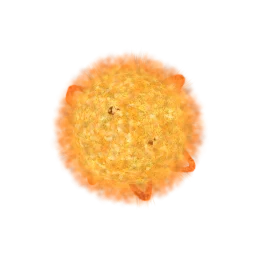 SunThe Sun is the star at the center of our solar system, a huge ball of hot, glowing gas.
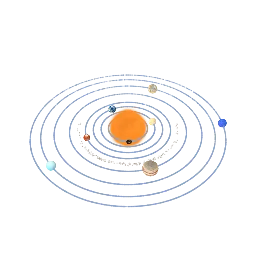 Solar ModelThe solar system is the Sun and everything that circles it: eight planets, their moons, and many asteroids and comets.
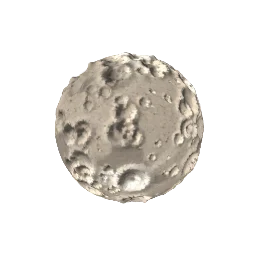 Mercury ModelMercury is the smallest planet and the closest to the Sun, a gray rocky world covered in craters, a little bigger than our Moon.
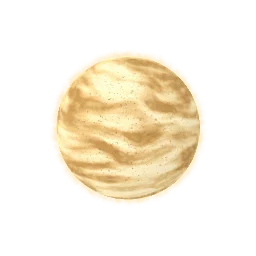 Venus ModelVenus is the second planet from the Sun and nearly the same size as the Earth.
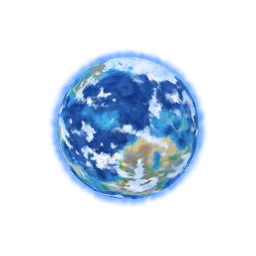 Earth ModelThe Earth is the third planet from the Sun and our home, the only world known to have life.
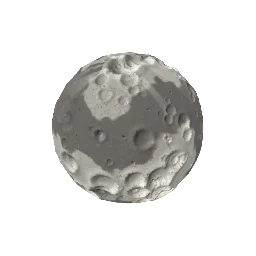 Moon ModelThe Moon is the Earth's only natural satellite, a gray world of craters about a quarter as wide as the Earth.
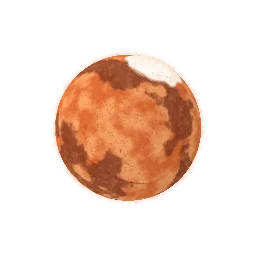 Mars ModelMars is the fourth planet from the Sun, a cold, dry, rocky world about half as wide as the Earth.
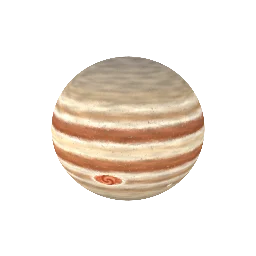 JupiterJupiter is the biggest planet, a giant ball made mostly of hydrogen and helium gas, with no solid surface to stand on.
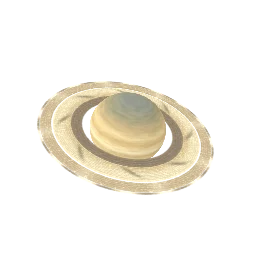 SaturnSaturn is the sixth planet from the Sun, a giant ball of gas with the brightest rings in the solar system.
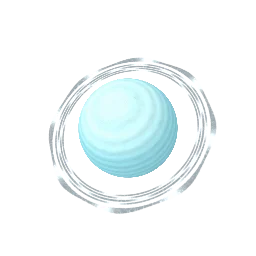 UranusUranus is the seventh planet from the Sun, an ice giant colored blue-green by methane gas in its air.
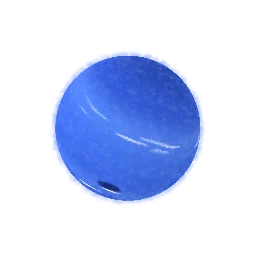 NeptuneNeptune is the eighth and farthest planet from the Sun, an ice giant of pale greenish blue, a little bluer than Uranus; the deep blue of older spacecraft pictures came from processing.
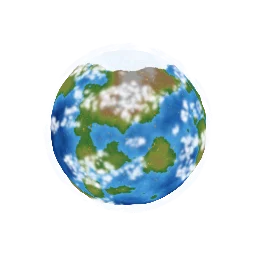 Tiny PlanetA tiny, made-up planet built by the computer from a sphere and a palette of planet colors: blue seas, green land and white clouds for Earth, rusty deserts and white polar caps for Mars, gray craters for the Moon, and banded storms for Jupiter and Neptune.
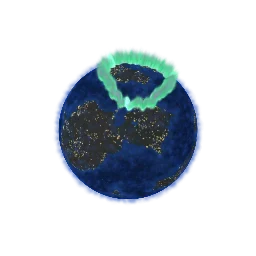 Aurora WorldAn aurora is the glowing light that ripples across the sky near the poles, called the northern and southern lights on Earth.
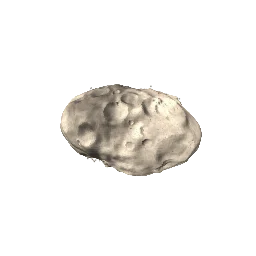 AsteroidMost circle the Sun in the main asteroid belt, between Mars and Jupiter.
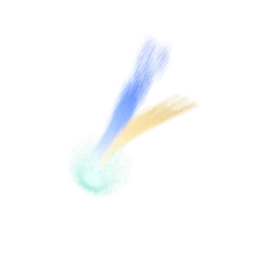 CometA comet is a lump of ice, dust and rock, often only a few kilometers wide, that travels around the Sun on a long, stretched orbit.
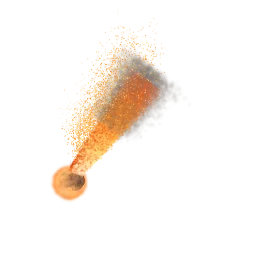 MeteorA meteor, or shooting star, is the streak of light made when a bit of space rock rushes into the air at tens of kilometers a second and burns up.
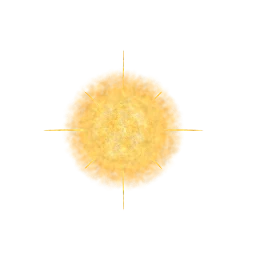 StarA star is a huge ball of hot gas that shines because, deep in its core, it squeezes hydrogen into helium and gives off energy.
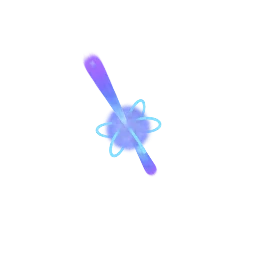 PulsarA pulsar is a neutron star, the crushed core left after a giant star explodes.
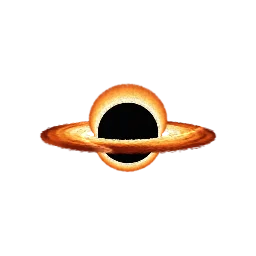 Black HoleA black hole is a place where gravity is so strong that nothing that crosses its edge, the event horizon, can get out again, not even light.
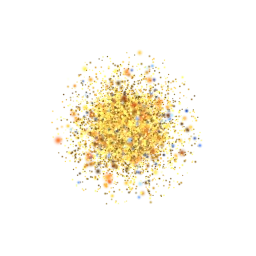 Star ClusterA globular cluster is a ball of hundreds of thousands of stars held together by their own gravity, packed tightest at the middle.
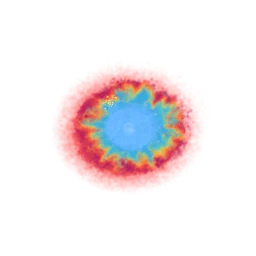 Ring NebulaA planetary nebula is a glowing shell of gas puffed off by a dying star like the Sun.
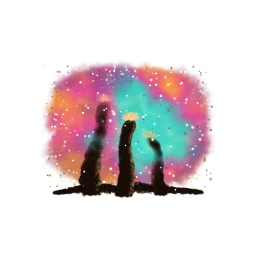 NebulaA nebula is a huge cloud of gas and dust in space.
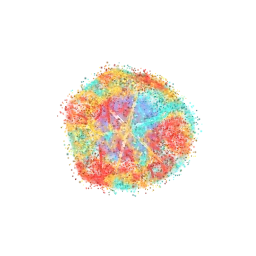 SupernovaA supernova is the explosion of a star, one of the biggest blasts in the universe.
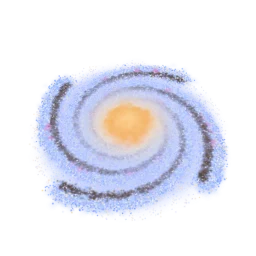 Spiral GalaxyA galaxy is a huge family of stars, gas and dust held together by gravity.
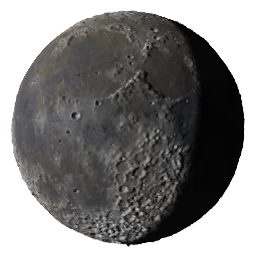 Real MoonThe real Moon from NASA's maps: its colors from the Lunar Reconnaissance Orbiter's wide-angle camera, its heights from the orbiter's laser altimeter.
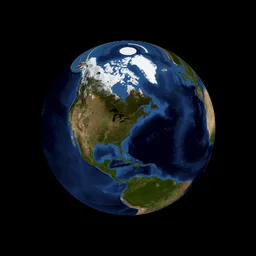
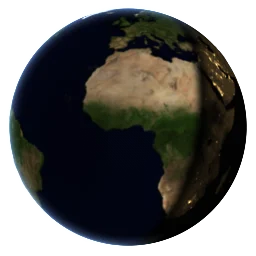 Real PlanetsThe real Earth from NASA and NOAA maps: colors from NASA's Blue Marble (a cloud-free mosaic from the Terra satellite), heights from NOAA's ETOPO 2022, and city lights from NASA's Black Marble.
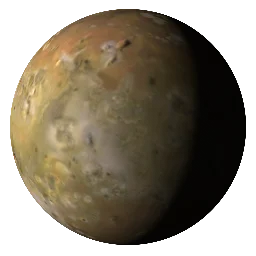 Real MoonsFive big moons from USGS maps of pictures by the Voyager, Galileo and Cassini spacecraft: volcanic Io; Europa, cracked ice over a hidden ocean; Ganymede, the largest moon in the solar system; cratered Callisto; and Saturn's moon Titan, with lakes of liquid methane and ethane.
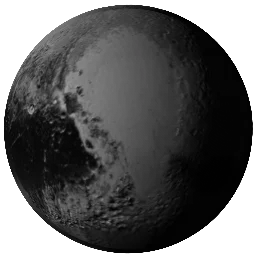 Small WorldsThree small worlds with their real shapes and heights: Pluto, mapped by NASA's New Horizons as it flew past in 2015, and the dwarf planet Ceres and the asteroid Vesta, mapped by NASA's Dawn, which orbited both.
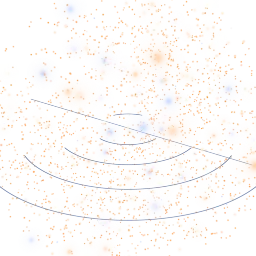 Star ExplorerEvery star within about 65 light-years (20 parsecs) of the Sun, where it really is: about 2,200 stars measured by ESA's Gaia spacecraft, from the tiny shift of each star's position as Earth goes round the Sun.
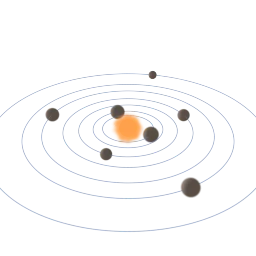 Real Star SystemsReal planets round other stars, from the NASA Exoplanet Archive: TRAPPIST-1, a cool red dwarf 40 light-years away with seven rocky planets, all closer to it than Mercury is to the Sun; TOI-178, whose six planets go round in a chain of near-simple ratios; and 55 Cancri, with a planet whose year is shorter than a day.
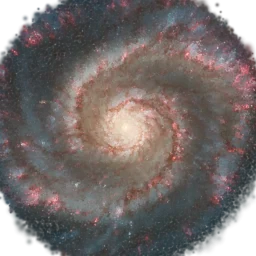 Real GalaxiesFour real galaxies from telescope pictures: the Whirlpool (M51), the Pinwheel (M101) and the Phantom (M74) from the Hubble Space Telescope, and the Southern Pinwheel (M83) from the European Southern Observatory's Very Large Telescope.
 Powers of TenEvery step of the zoom is ten times the last: the label names the power of ten, what you see and its size, and where the picture or data comes from, and the bar shows a round length at that scale.
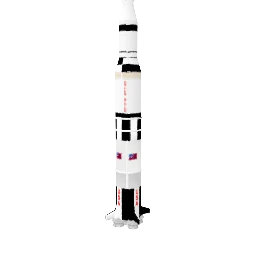 Saturn VThe Saturn V, the rocket that sent astronauts to the Moon from 1968 to 1972, as splats from NASA's 3D model.
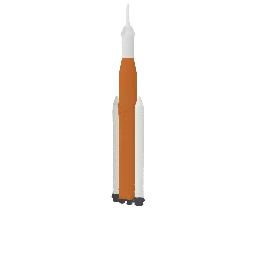 SLS RocketThe Space Launch System, NASA's rocket for the Artemis missions back to the Moon, as splats from NASA's 3D model, colored as it flew on Artemis I in November 2022.
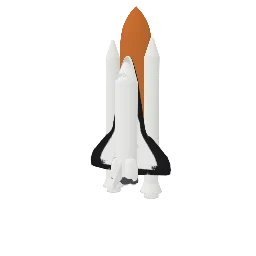 Space ShuttleThe Space Shuttle at launch, as splats from NASA's 3D model: the winged orbiter, the big orange external tank that fed its three main engines with liquid hydrogen and oxygen, and the two white solid rocket boosters.
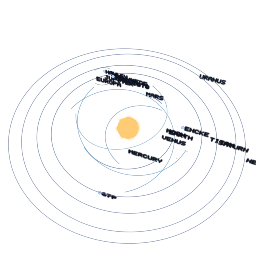 Solar SystemThe Sun, the eight planets, six big moons, four famous comets and 4,000 real asteroids, each where its real orbit puts it on the date you pick, from 1800 to 2050.
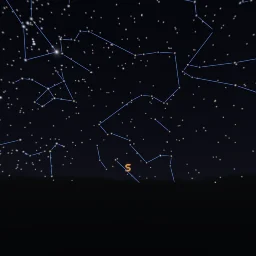 Night Sky5, each a sharp point whose brightness follows its magnitude and whose color follows its temperature, and the Milky Way from the Gaia spacecraft's map of the sky.