Earth Model
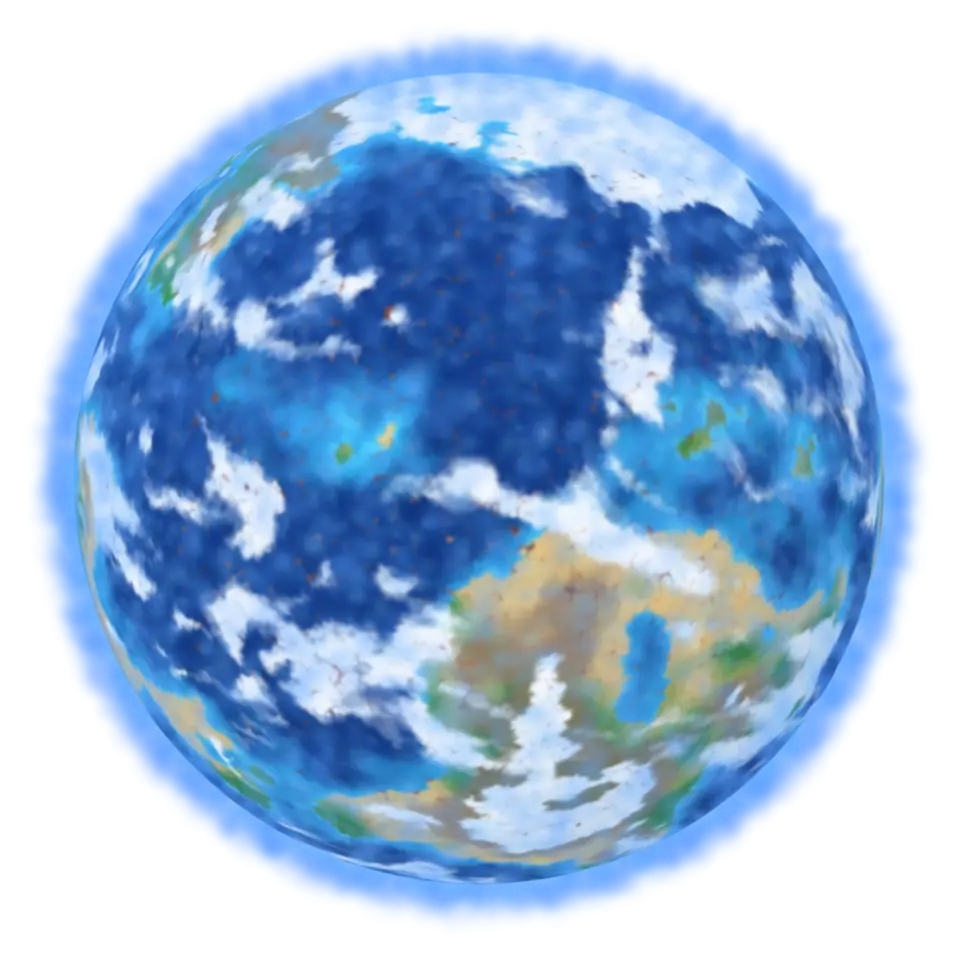
The Earth is the third planet from the Sun and our home, the only world known to have life.
This picture is a cloud of paint. You can , , , , , , and .
Paint with your finger. It stays on these splats, wherever they go next.
Your paint is on this cloud. to see the sharp picture.
- Shelf
- Space
- Kind
- Built from a recipe
- Sound
- Yes
- Hands-on
- Yes
- Licenses
- Own work (made in the page)
How to play
Tap it to turn it through one day and night.
Its controls
| Control | Kind | Range | Start |
|---|---|---|---|
| Turn through a day | Tap | ||
| A day | Button |
About it
The Earth is the third planet from the Sun and our home, the only world known to have life. Oceans cover about 71 percent of its surface, and it turns once on its axis about every 24 hours, which gives us day and night.
Tap it to turn it through one day, with the Sun off to the left. Night falls over one half, the globe turns once, and city lights come on as the land turns into the dark, then go out again at dawn.
Details
- Splats
- Opens at 200,000 at Mid Detail, 58,937 at Low, and up to 860,000 at Max
Sources and credits
Made in Splashery. Its code is MIT.
Share it
This link opens it in the Playground. To put it on your own page, add the element and one script tag. Every option.
https://splashery.app/play/?toy=earth
<script type="module" src="https://splashery.app/play/src/element.js"></script>
<splashery-toy toy="earth"></splashery-toy>
Nearby
 Real PlanetsThe real Earth from NASA and NOAA maps: colors from NASA's Blue Marble (a cloud-free mosaic from the Terra satellite), heights from NOAA's ETOPO 2022, and city lights from NASA's Black Marble.
 Venus ModelVenus is the second planet from the Sun and nearly the same size as the Earth.
 NeptuneNeptune is the eighth and farthest planet from the Sun, an ice giant of pale greenish blue, a little bluer than Uranus; the deep blue of older spacecraft pictures came from processing.
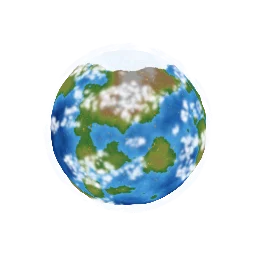 Tiny PlanetA tiny, made-up planet built by the computer from a sphere and a palette of planet colors: blue seas, green land and white clouds for Earth, rusty deserts and white polar caps for Mars, gray craters for the Moon, and banded storms for Jupiter and Neptune.