AI and Computing
17 Splashes.
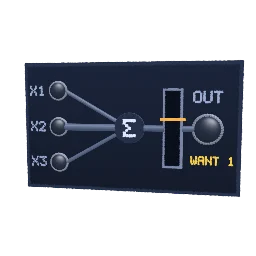 PerceptronA perceptron is the simplest artificial neuron, described by Frank Rosenblatt in 1958.
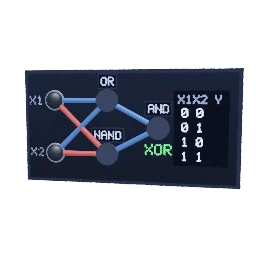 Multilayer NetOne perceptron can only split its inputs with a single straight line, so it cannot learn XOR, “exclusive or”, which is 1 when exactly one of two inputs is 1.
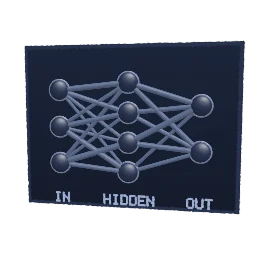 Neural NetworkA neural network is made of simple artificial neurons in layers.
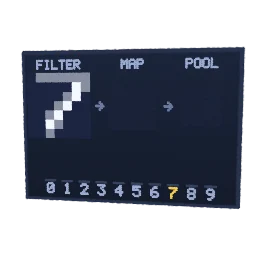 ConvNetA convolutional network, or CNN, is a neural network built for pictures.
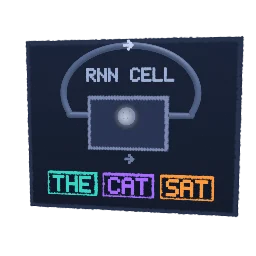 Recurrent NetworkA recurrent network, or RNN, reads a sequence, like the words of a sentence, one piece at a time.
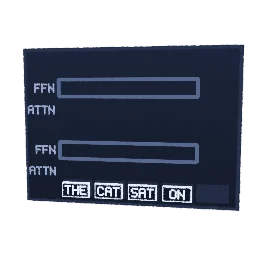 TransformerA transformer is a neural network first described in 2017, for translating text.
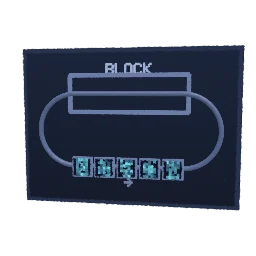 Looped TransformerA looped transformer runs the same transformer block again and again, feeding its output back in as its next input, instead of stacking many different layers.
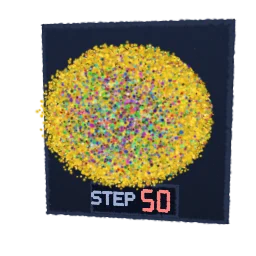 Diffusion ModelA diffusion model makes pictures out of noise.
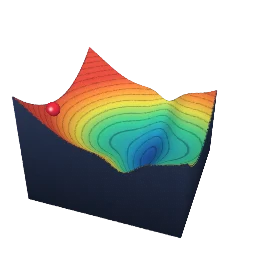 Gradient DescentGradient descent is how most neural networks learn.
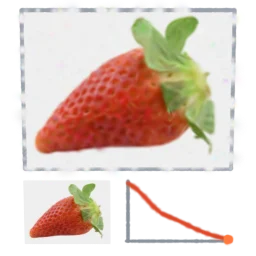 Gaussian SplattingGaussian splatting draws a scene with many soft, colored blobs called splats.
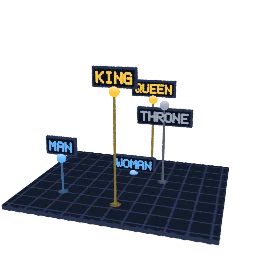 Word VectorsWord vectors turn each word into a list of numbers, a point in a space with many directions, so that words used in similar ways land near each other.
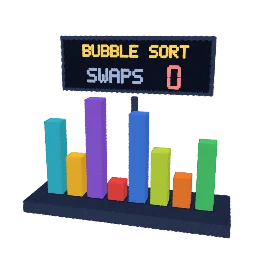 Sorting MachineA sorting algorithm is a step-by-step recipe a computer follows to put things in order.
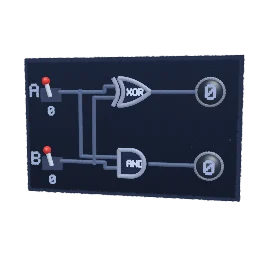 Half AdderA half adder adds two bits, each 0 or 1.
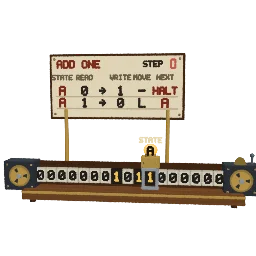 Turing MachineIn 1936 the mathematician Alan Turing imagined the simplest possible computer: a long tape of squares, a head that reads and writes one square at a time, and a short table of rules.
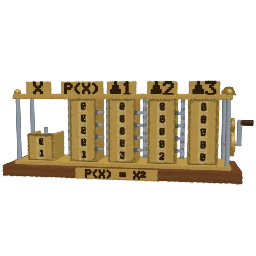 Difference EngineCharles Babbage designed Difference Engine No.
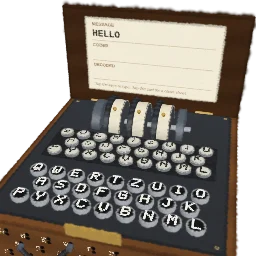 Enigma MachineThe Enigma was a cipher machine German forces used to keep radio messages secret in World War II.
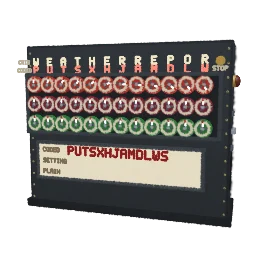 BombeThe Bombe was the codebreaking machine of Bletchley Park in England.