Circle and Waves
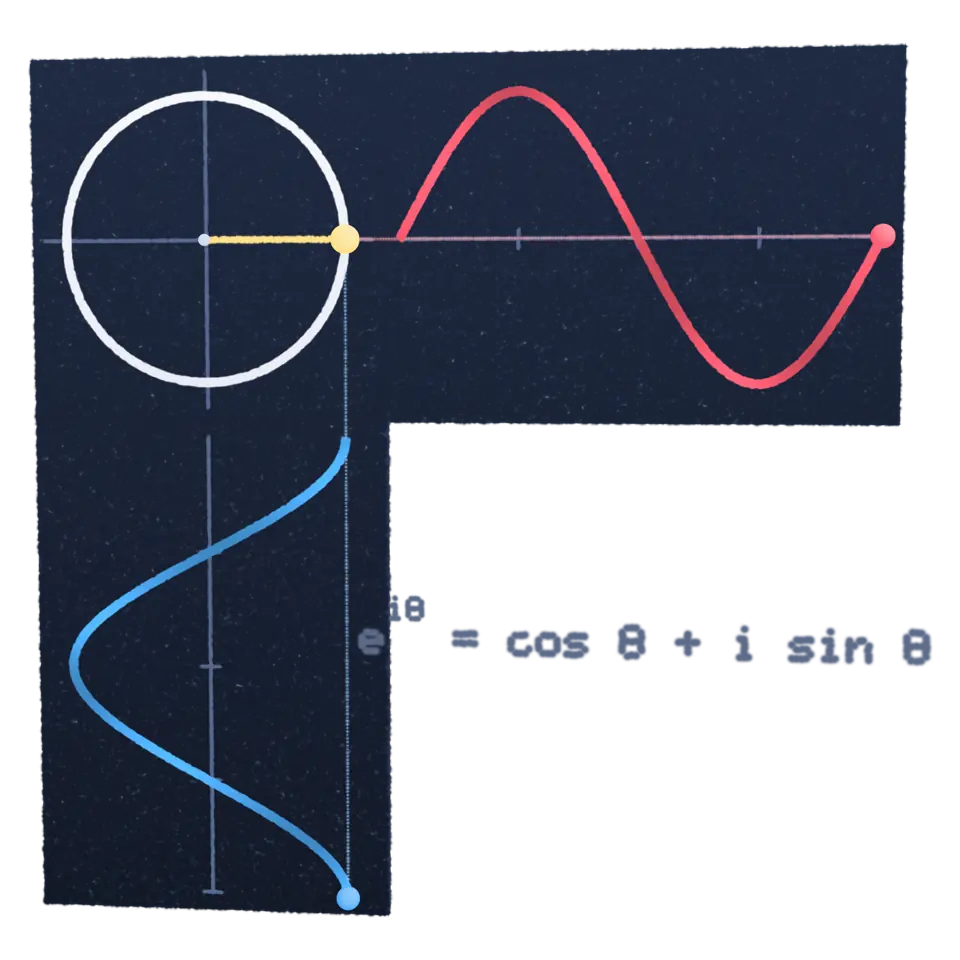
The unit circle is a circle with a radius of 1.
This picture is a cloud of paint. You can , , , , , , and .
Paint with your finger. It stays on these splats, wherever they go next.
Your paint is on this cloud. to see the sharp picture.
- Shelf
- Math
- Kind
- Built from a recipe
- Your own
- Your own path
- Sound
- Yes
- Hands-on
- Yes
- Licenses
- Own work (made in the page)
How to play
Tap to send the point round. Hands-on: drag the point round; the waves follow.
Its controls
| Control | Kind | Range | Start |
|---|---|---|---|
| Go round | Tap | ||
| Turn | Button | ||
| View | List | 2 choices | 2D diagram |
| Path | List | 6 choices | Circle |
| Turns | Setting |
About it
The unit circle is a circle with a radius of 1. As a point goes around it, turning through an angle called θ, its height is the sine of θ and its left-right place is the cosine. Traced out over time, they make two waves, the same shapes as sound and light waves.
Tap it and the point goes once around while its height draws the sine wave and its left-right place draws the cosine wave. For the circle, Euler's formula, e^(iθ) = cos θ + i sin θ, lights up piece by piece. In the Splash tab, try a 3D helix, another path, up to three turns, or type your own: x = …, y = … with t, or r = … with θ.
Details
- Splats
- Opens at 200,000 at Mid Detail, 60,000 at Low, and up to 590,000 at Max
- Your own files
- .txt
Sources and credits
Made in Splashery. Its code is MIT.
Share it
This link opens it in the Playground. To put it on your own page, add the element and one script tag. Every option.
https://splashery.app/play/?toy=unit-circle
<script type="module" src="https://splashery.app/play/src/element.js"></script>
<splashery-toy toy="unit-circle"></splashery-toy>
Nearby
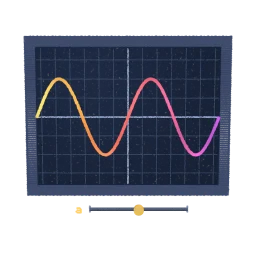 Graph PlotterA graph turns an equation into a picture.
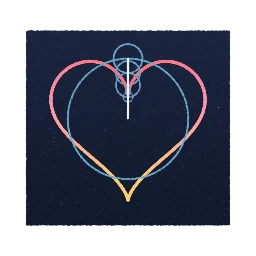 Fourier CirclesCircles turning on circles can draw almost any closed shape, given enough of them.
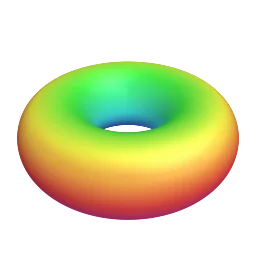 Splat EquationEvery splat has a place and a color.
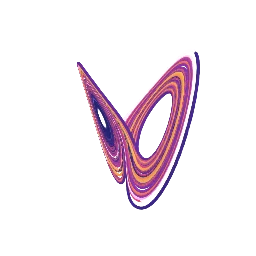 AttractorsIn 1963 the scientist Edward Lorenz made a very simple model of moving air: three short equations.