Neuron Specimen
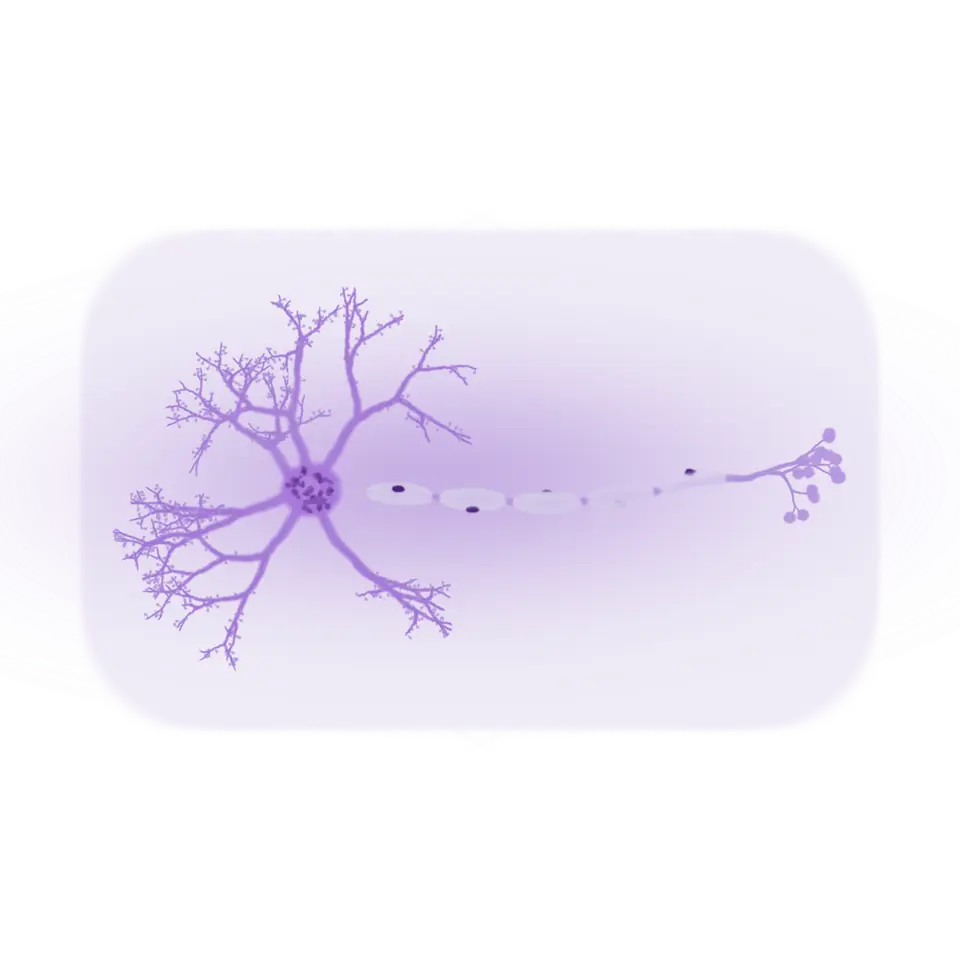
A textbook nerve cell on a lit microscope slide: dendrites, a cell body with its nucleus and Nissl bodies, a myelinated axon, and terminals.
This picture is a cloud of paint. You can , , , , , , and .
Paint with your finger. It stays on these splats, wherever they go next.
Your paint is on this cloud. to see the sharp picture.
- Shelf
- Tiny World
- Kind
- Built from a recipe
- Sound
- Yes
- Licenses
- CC0, MIT
How to play
Tap the cell to stimulate it there. In Splash, change the stain or turn Focus.
Its controls
| Control | Kind | Range | Start |
|---|---|---|---|
| Fire a spike | Tap | ||
| Focus | Slider | 0 to 100% | 100% |
| Fire a spike | Button | ||
| Stain | List | 3 choices | Nissl · cresyl violet |
About it
From a concept by Ryan Kamp. A textbook nerve cell on a lit microscope slide: dendrites, a cell body with its nucleus and Nissl bodies, a myelinated axon, and terminals. At full Focus, most screens draw 32,768 splats, low-memory phones 8,192.
A tap is a stimulating electrode: the signal spreads through the dendrites to the cell body, which fires a spike down the axon, node to node. The waveform is the Hodgkin-Huxley squid axon model, slowed; this is a schematic, not a measured neuron. Nissl dyes the Nissl bodies and leaves the axon pale, Golgi turns the neuron black on amber, and H&E shows pink cytoplasm and blue-purple nuclei. Lower Focus: pairs of splats merge into one, keeping mass, center, and covariance, while the slide stays lit. Made by Ryan Kamp, CC0; code MIT.
Sources and credits
| Work | By | License |
|---|---|---|
| From a concept by Ryan Kamp. Procedural specimen made by Ryan Kamp; CC0. Code: MIT. | CC0, MIT | |
| Hodgkin-Huxley model (1952): squid giant axon; slowed for viewing. Stain colors follow textbook histology. The model is published science, not a licensed asset; the splash's simulation of it is Ryan Kamp's own procedural work. | CC0 1.0 |
Share it
This link opens it in the Playground. To put it on your own page, add the element and one script tag. Every option.
https://splashery.app/play/?toy=specimen-neuron
<script type="module" src="https://splashery.app/play/src/element.js"></script>
<splashery-toy toy="specimen-neuron"></splashery-toy>
Nearby
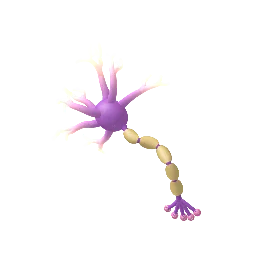 NeuronA neuron is a nerve cell, the kind of cell that carries messages around the brain and body.
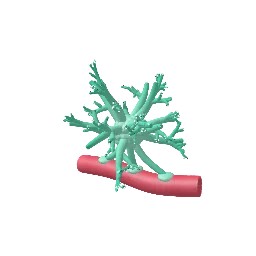 Astrocyte" Astrocytes look after the neurons around them, and the ends of their arms, called end-feet, wrap around tiny blood vessels and help control how much blood flows by.
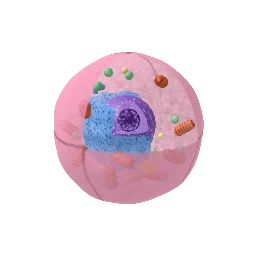 Animal CellCells are the tiny building blocks of every living thing, and the human body is made of tens of trillions of them.
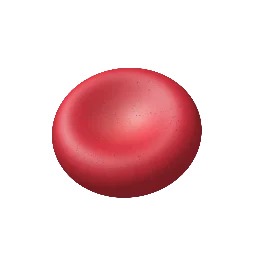 Red Blood CellRed blood cells carry oxygen from the lungs to every part of the body.