Tower of Pisa
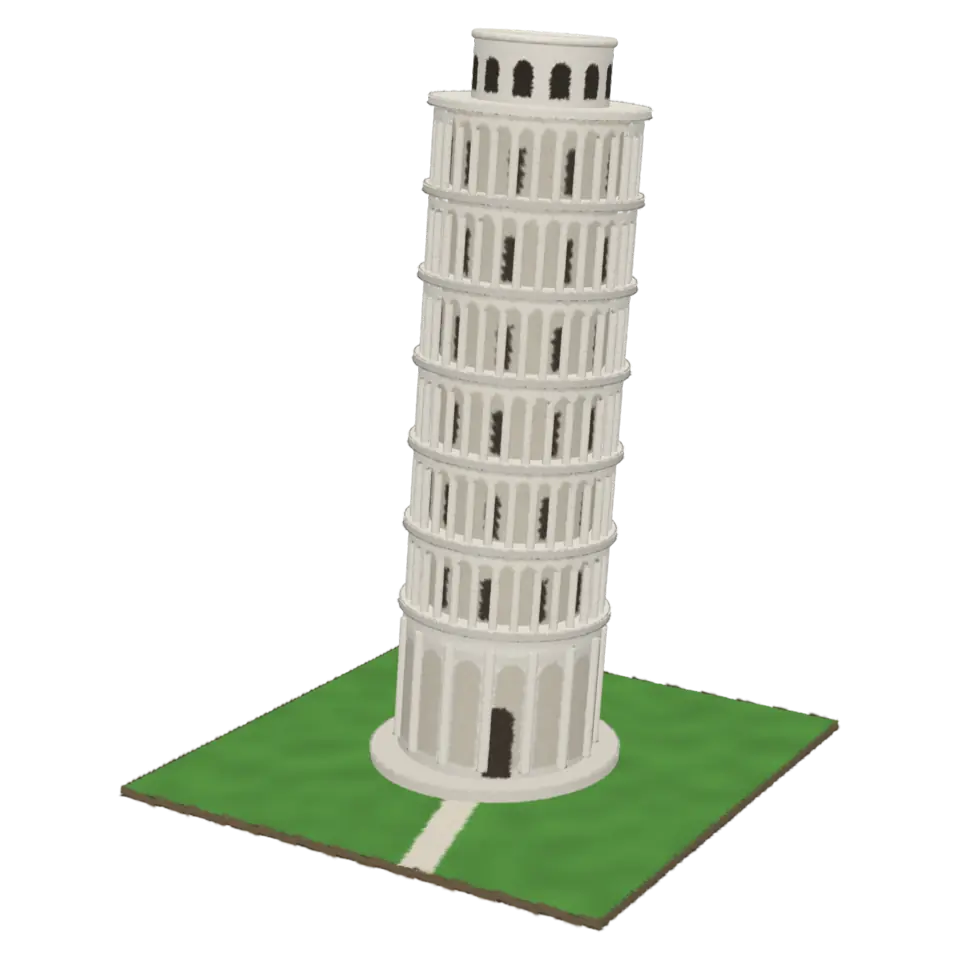
The Leaning Tower of Pisa, in Italy, is the bell tower of the city's cathedral.
This picture is a cloud of paint. You can , , , , , , and .
Paint with your finger. It stays on these splats, wherever they go next.
Your paint is on this cloud. to see the sharp picture.
- Shelf
- Landmarks
- Kind
- Built from a recipe
- Sound
- Yes
- Hands-on
- Yes
- Licenses
- Own work (made in the page)
How to play
Tap to drop two balls from the top. Set the lean in the Splash tab.
Its controls
| Control | Kind | Range | Start |
|---|---|---|---|
| Drop two balls | Tap | ||
| Lean | Slider | 0 to 100% | 35% |
| Drop | Button |
About it
The Leaning Tower of Pisa, in Italy, is the bell tower of the city's cathedral. Building began in 1173, and the tower started to lean while it was still being built, because the ground under it is soft; it took about 200 years to finish. Engineers straightened it a little from 1990 to 2001, and it now leans about 4 degrees.
The story goes that Galileo dropped two balls of different weights from the top to show that they fall together. Tap it and try it: a big iron ball and a small bronze one roll off the top and land at the same moment. Set the lean with the Lean slider in the Splash tab.
Details
- Splats
- Opens at 200,000 at Mid Detail, 59,681 at Low, and up to 750,000 at Max
Sources and credits
Made in Splashery. Its code is MIT.
Share it
This link opens it in the Playground. To put it on your own page, add the element and one script tag. Every option.
https://splashery.app/play/?toy=leaning-tower
<script type="module" src="https://splashery.app/play/src/element.js"></script>
<splashery-toy toy="leaning-tower"></splashery-toy>
Nearby
 Big BenBig Ben is the nickname of the great bell in the clock tower of the Houses of Parliament in London, England, and people often use it for the whole tower.
 Eiffel TowerThe Eiffel Tower is an iron lattice tower in Paris, built by the engineer Gustave Eiffel's company for the World's Fair of 1889.
 Twisting SupertallA supertall is a skyscraper more than 300 meters (about 1,000 feet) tall.
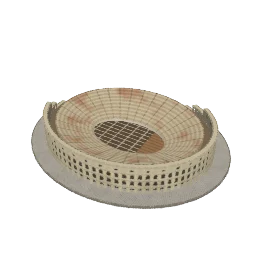 ColosseumThe Colosseum is a huge oval arena in Rome, Italy, built of stone and concrete about 2,000 years ago, and finished in the year 80.